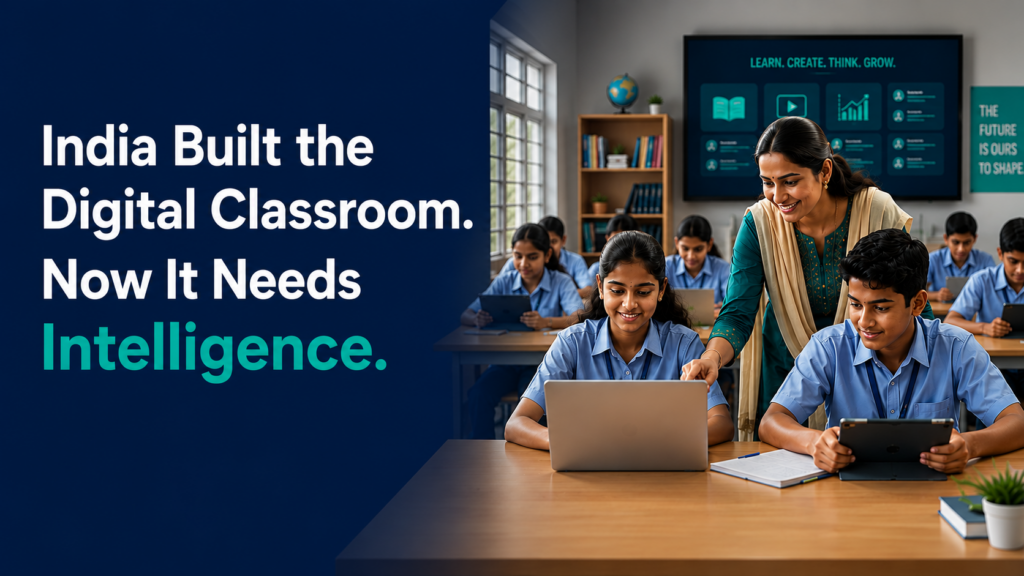
India Built the Digital Classroom. Now It Needs AI Learning Systems.
How India’s next education transformation will be powered not by more content, but by connected intelligence.
Over the last two decades, India has achieved something extraordinary.
A generation of education technology companies transformed classrooms by bringing curriculum-aligned digital content to millions of learners.
Interactive lessons. Smart classrooms. Virtual labs. Teacher training. Assessment platforms.
What was once available only in a handful of premium institutions became accessible across cities, towns, and rural communities.
The result was a genuine educational leap forward. But a new challenge has emerged.
Despite having more content, more platforms, and more technology than ever before, educators still struggle with fragmented workflows, disconnected systems, and increasing administrative workloads.
The content arrived. The intelligence did not. And that is where the next phase of educational transformation begins.
As discussed in our article on AI for learning and personalized education, the future of education depends not only on access to content, but on the ability to personalize, connect, and continuously improve learning experiences.
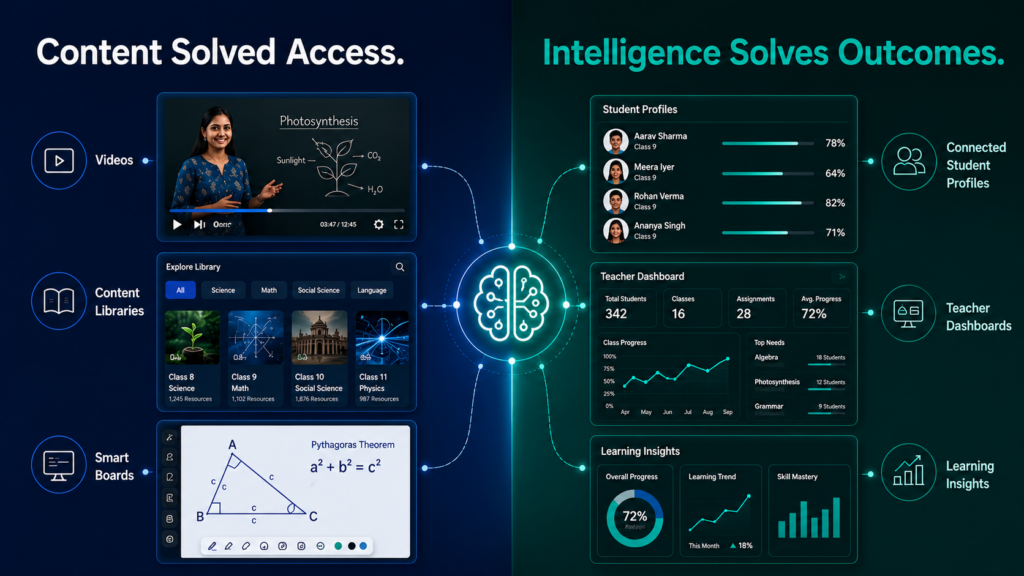
The Content Platform Era: What It Solved
The first generation of digital education platforms solved an important problem.
Access.
Teachers gained access to:
Structured lesson plans
Curriculum-aligned videos
Interactive simulations
Digital assessments
Teacher training resources
Students gained access to learning experiences that previously depended on geography and institutional resources.
This transformation helped create India’s modern digital classroom. For many institutions, it remains an essential foundation. But content platforms were designed to deliver information.
They were not designed to:
Connect workflows
Maintain institutional memory
Understand learning context
Provide real-time intelligence
And that distinction matters.
Why More AI Features Won’t Solve the Problem
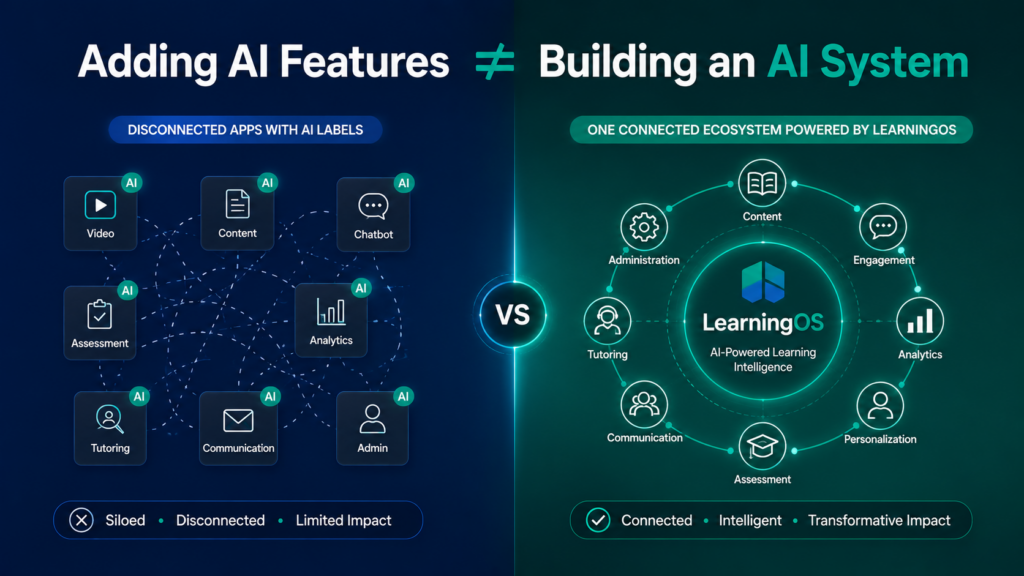
When organizations identify inefficiencies, the natural reaction is to add AI.
An AI chatbot.
An AI recommendation engine.
An AI-powered assessment tool.
These additions can certainly improve individual workflows. But they do not solve fragmentation. Adding AI to disconnected systems often creates more disconnected systems.
The teacher still manages multiple platforms. Student information still lives in separate databases. Institutional leaders still rely on delayed reporting.
The architecture remains fragmented. This is one of the reasons organizations are increasingly evaluating AI learning platforms that connect workflows instead of simply adding features.
What AI Learning Systems Do Differently
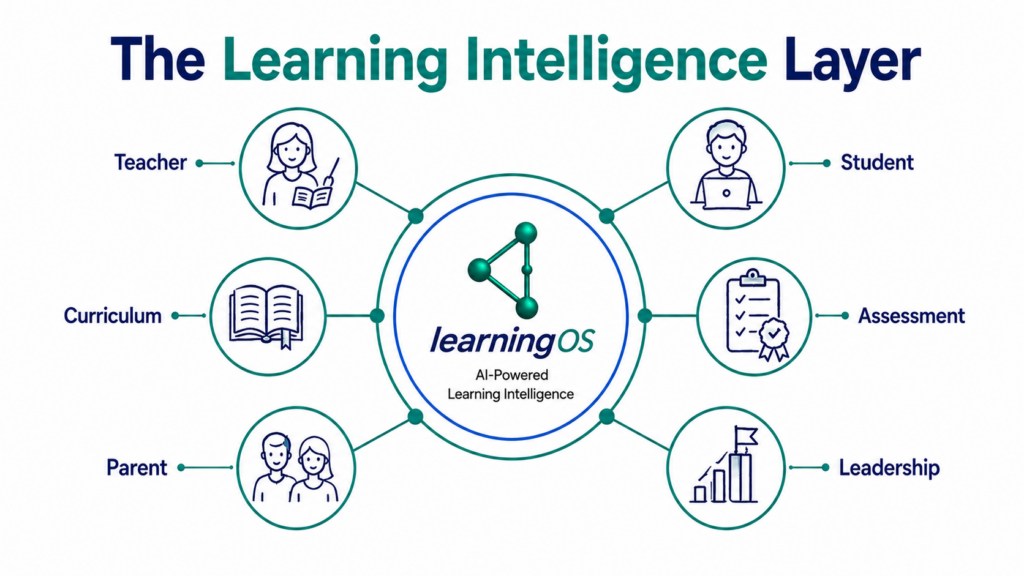
An AI learning system operates differently from a content platform. Instead of focusing on individual tasks, it connects the entire learning ecosystem.
Think of it like a smartphone operating system. The operating system doesn’t replace apps. It makes them work together. The same principle applies to education.
An AI learning system creates a unified intelligence layer connecting:
Curriculum
Assessments
Student performance
Teacher workflows
Communication systems
Institutional knowledge
This is similar to the shift described in our article on agentic AI operating systems for learning.
Why AI Learning Systems Matter for Indian Schools
India has already invested heavily in digital infrastructure. The next challenge is making that infrastructure intelligent.
AI learning systems help institutions:
> Reduce Teacher Workload
Administrative tasks consume a significant portion of teacher time.
AI automates repetitive activities while preserving human oversight.
> Improve Learner Engagement
Students receive personalized experiences instead of standardized journeys.
> Enable Early Intervention
Learning gaps become visible before they become problems.
> Create Continuous Learning Context
Every interaction contributes to a deeper understanding of learner needs.
> Improve Institutional Decision-Making
Leaders gain access to real-time operational intelligence.
The Opportunity for Publishers and EdTech Providers
This shift creates a significant opportunity.
Publishers and content providers have already built:
Curriculum expertise
Teacher trust
Institutional relationships
Content ecosystems
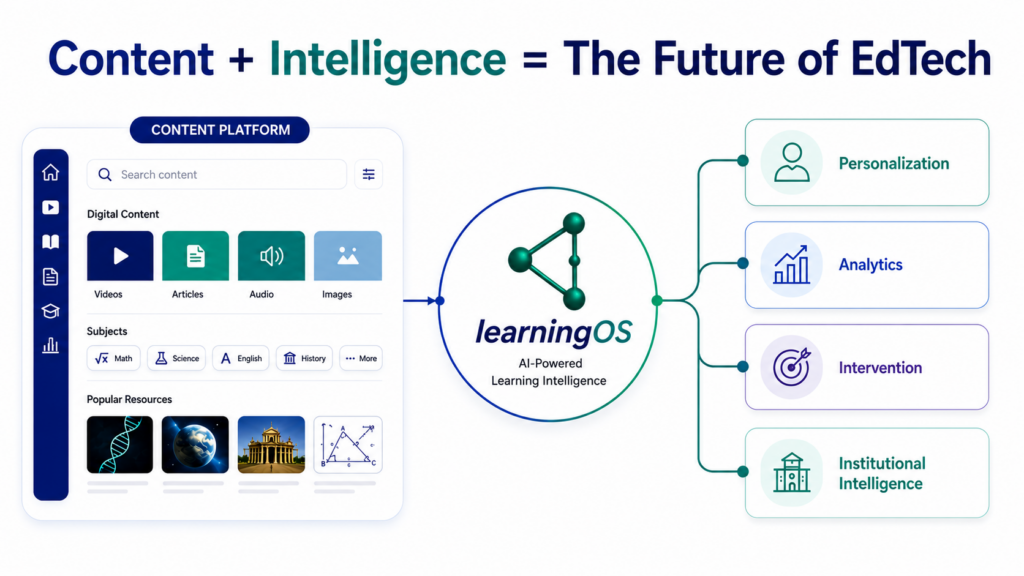
These assets remain incredibly valuable. But content alone is no longer enough.
The next layer of value comes from intelligence.
For Publishers & EdTech Providers
Your next growth opportunity may not be creating more content.
It may be adding the intelligence layer that makes your existing content more adaptive, measurable, and impactful.
👉 Explore how AAI Solutions’ learningOS works alongside existing platforms.
Why Governance Matters
As AI adoption accelerates, governance becomes critical.
Educational institutions increasingly require:
Data transparency
Explainability
Auditability
Human oversight
Responsible AI is not a feature.
It is architecture. An AI learning system must be governed by design to ensure trust, compliance, and accountability.
The Next Decade of Indian Education
India’s education ecosystem is entering a new phase.
The content layer exists. The access layer exists. The digital infrastructure exists.
What remains is the intelligence layer.
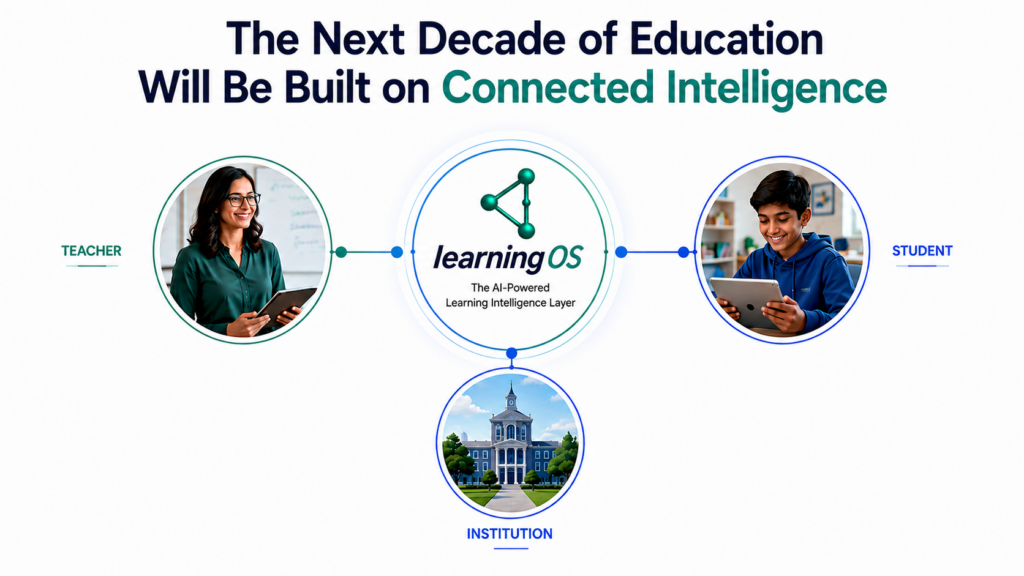
The institutions that understand this shift earliest will create competitive advantages that compound over time.
Not because they have more content. Not because they have more AI features.
Because they have connected intelligence.
FAQ
What is an AI learning system?
An AI learning system connects content, learners, educators, and institutional data into a unified ecosystem that continuously improves learning outcomes.
How is an AI learning system different from a content platform?
Content platforms deliver educational resources. AI learning systems connect content, workflows, assessments, and learner data to create personalized and intelligent learning experiences.
Why do Indian schools need AI learning systems?
Schools increasingly operate across multiple digital tools. AI learning systems unify these environments and help educators make better decisions.
Can AI replace teachers?
No. AI is most effective when it supports teachers by automating repetitive work and providing actionable insights.
People Also Ask
What is an AI operating system for education?
An AI operating system is a platform that connects educational workflows, content, communication, and data into a unified intelligence layer.
How does AI improve learning outcomes?
AI enables personalization, real-time feedback, adaptive learning pathways, and early intervention for struggling learners.
What is the future of AI in Indian education?
The future lies in connected AI learning systems that support teachers, personalize learning, and help institutions make better decisions.
What are AI learning platforms?
AI learning platforms use artificial intelligence to personalize learning, automate tasks, and provide real-time insights that help improve learner engagement and outcomes. They adapt learning experiences based on individual needs, performance, and behavior.
Conclusion
India successfully built the digital classroom. The next transformation is making it intelligent.
The future belongs to institutions that connect content, educators, learners, and data into a unified ecosystem.
That future will be powered not by more tools. But by AI learning systems.
Ready to Add Intelligence to Your Existing Learning Ecosystem?
Whether you’re a school group, higher education institution, publisher, or EdTech provider, learningOS helps connect your existing systems into a unified intelligence layer.