AI Learning Platforms: Benefits, Use Cases & How to Choose the Right Solution
Most organizations don’t struggle with adopting AI. They struggle with choosing the right platform.
As AI continues to reshape education and learning & development (L&D), institutions are faced with a growing number of tools promising personalization, automation, and better outcomes.
But adding more tools doesn’t always improve learning. Sometimes, it creates more fragmentation.
That raises a critical question:
What actually makes an AI learning platform effective?
This guide breaks down what AI learning platforms are, how they differ from traditional systems, and what to look for when evaluating one.
What Are AI Learning Platforms?
AI learning platforms use artificial intelligence to personalize, automate, and continuously optimize learning experiences.
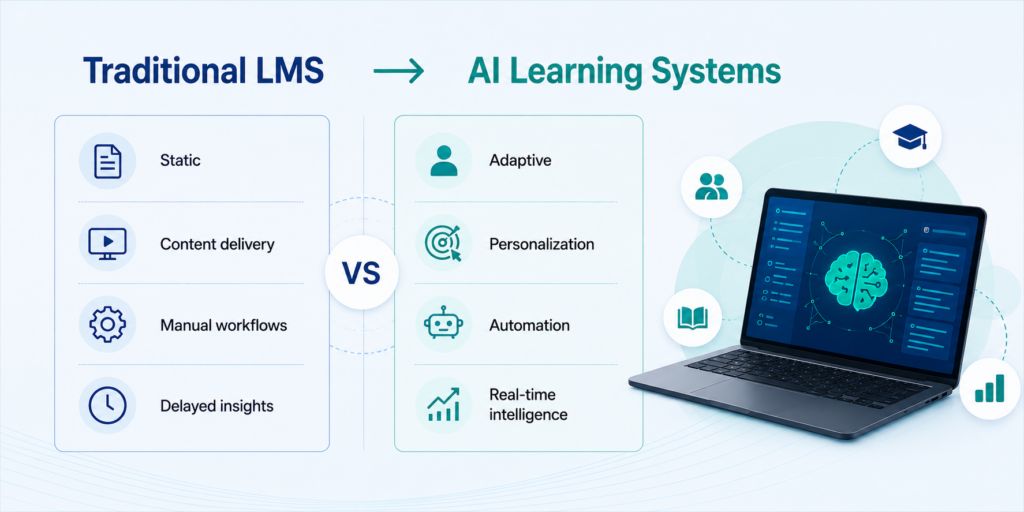
Unlike traditional learning management systems (LMS), AI-powered learning platforms adapt in real time based on learner behavior and performance.
These platforms can:
-
Recommend personalized content
-
Identify knowledge gaps
-
Automate assessments
-
Provide real-time feedback
Instead of simply delivering content, they support continuous learning intelligence.
To understand how AI is reshaping learning overall, read our guide on AI for learning and personalized education.
AI Learning Platforms vs Traditional LMS
Most LMS platforms were designed for:
✔ Content storage
✔ Course delivery
✔ Tracking completion
AI learning platforms go further.
The future isn’t replacing LMS. It’s making them intelligent.
Benefits of AI Learning Platforms
1. Personalized Learning at Scale
AI analyzes:
-
Performance
-
Engagement
-
Behavior
Then adapts learning accordingly.
No two learners receive identical experiences.
2. Real-Time Feedback
Instead of waiting days:
Learners receive immediate support.
Educators identify problems faster.
3. Reduced Administrative Burden
AI automates:
-
Grading
-
Reporting
-
Recommendations
Giving educators more time to teach.
4. Continuous Learning Intelligence
Learning doesn’t reset after each interaction. AI maintains context.
This creates persistent learning pathways.
Real-World Use Cases of AI Learning Platforms
– Schools
Personalized curriculum delivery
– Universities
Student performance analytics
– Enterprises (L&D)
Continuous employee upskilling
– Healthcare
Simulation-based AI training
👉 AI learning platforms are moving beyond education into workforce transformation.
Why Most AI Learning Platforms Fail
Here’s an uncomfortable truth:
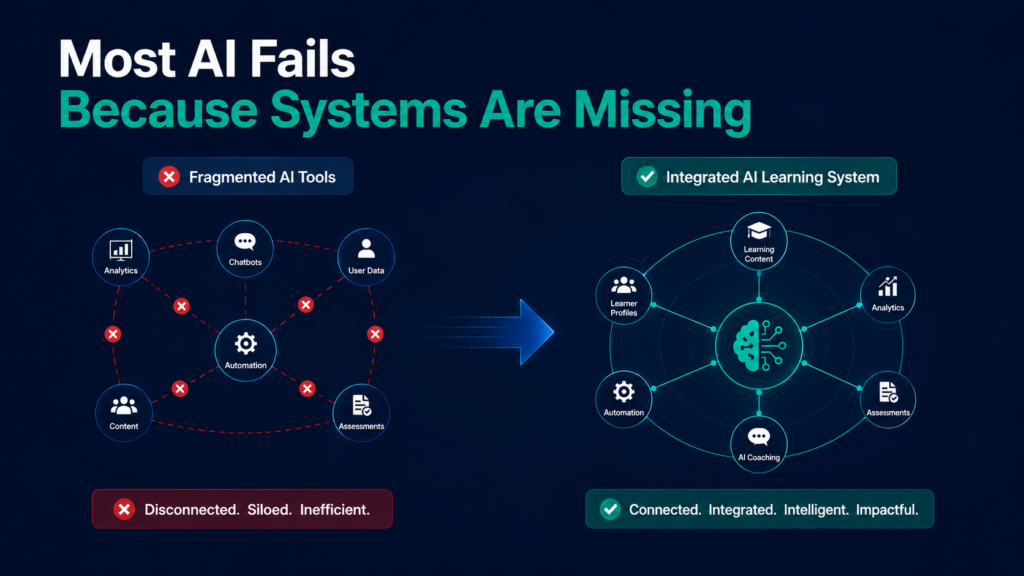
Many platforms add AI features. Very few create AI systems.
Common problems:
-
Fragmented tools
-
No persistent context
-
Poor integration
-
Weak adoption
This is why organizations are increasingly moving toward agentic AI systems.
5 Features to Look for in an AI Learning Platform
When evaluating AI learning platforms, ask:
1. Does it maintain learning memory?
Can the system remember progress across time?
2. Does it integrate workflows?
Or create another silo?
3. Does it support educators?
AI should amplify—not replace.
4. Does it provide real-time intelligence?
Delayed insights reduce impact.
5. Is it scalable?
Can it work across learners and teams?
How AAI Solutions Approaches AI Learning Platforms
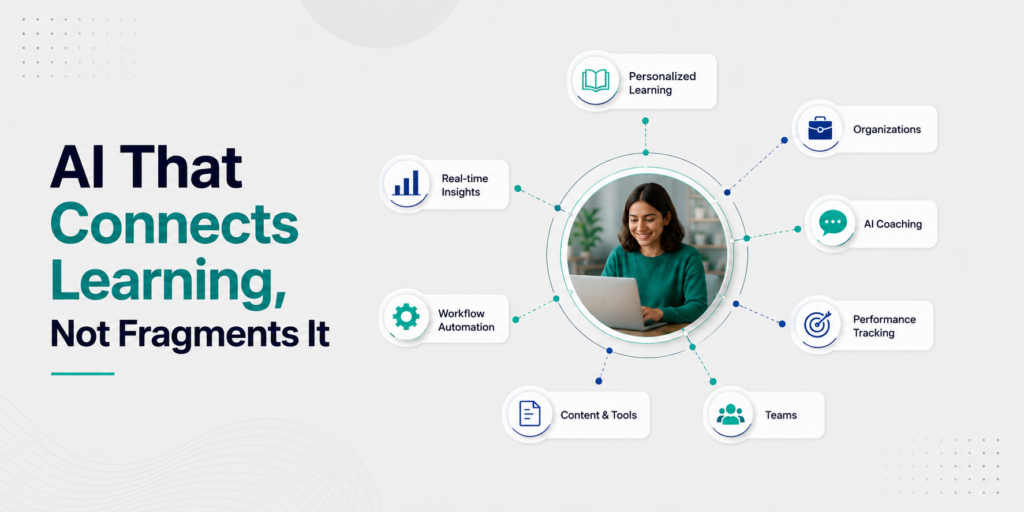
At AAI Solutions, the goal is not adding another tool. It’s creating connected intelligence.
Explore how our AI-powered learning platform supports:
-
Workflow integration
-
Real-time coaching
-
Persistent learning memory
FAQ: AI Learning Platforms
What is an AI learning platform?
An AI learning platform uses artificial intelligence to personalize learning, automate processes, and improve outcomes.
Are AI learning platforms better than LMS?
They serve different purposes.
AI platforms add intelligence and personalization.
How do AI learning platforms improve education?
Through automation, personalization, and real-time insights.
Can AI learning platforms replace teachers?
No.
They support educators—not replace them.
People Also Ask
What are examples of AI learning platforms?
Examples include adaptive learning systems, AI tutoring platforms, and integrated AI education ecosystems.
How is AI used in learning platforms?
AI analyzes learner behavior and adjusts experiences in real time.
Are AI learning platforms expensive?
Costs vary depending on scale and complexity.
The Future of AI Learning Platforms
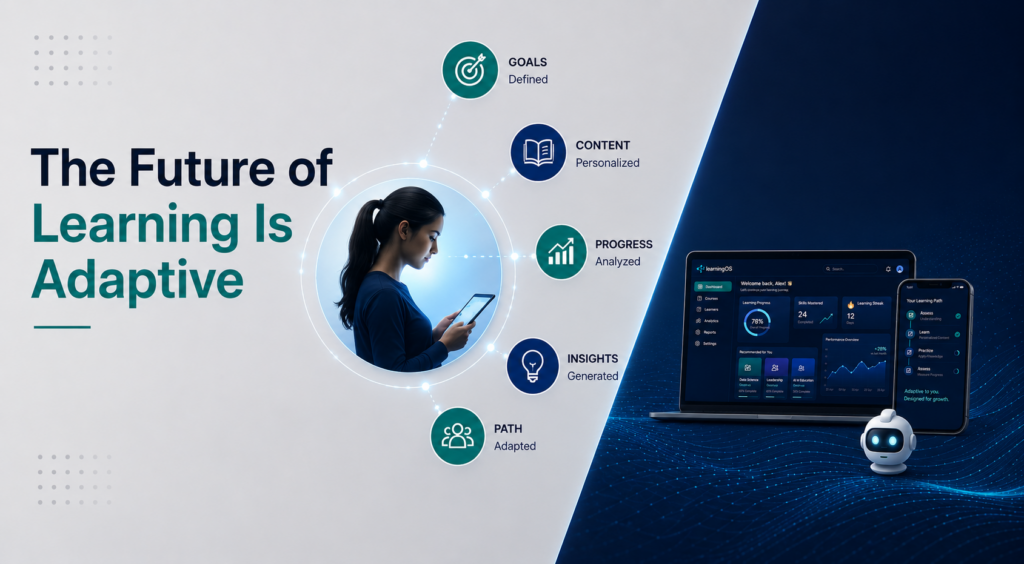
The next generation of platforms will:
✔ Predict learning gaps
✔ Personalize continuously
✔ Support lifelong learning
AI will move from:
Tool → Assistant → System
Conclusion
AI is changing learning.
But success depends less on adding features, and more on choosing systems that connect intelligence across the learning journey.
The future belongs to organizations that adopt AI learning platforms designed for adaptation, continuity, and scale.
From AI Tools to Intelligent Learning Systems
Most organizations are still experimenting with AI.
The real advantage comes from connecting it across the learning journey.
👉 Explore the AI learning platform today!
👉 Read: AI for Learning: How Artificial Intelligence Is Transforming Education